

How to Sleep Better While Camping
Quick answer
To sleep better camping, focus on the things that cause most restless nights: an uneven pitch, a cold or uncomfortable sleeping surface, temperature changes and campsite noise. A few practical choices before bed usually matter more than buying lots of extra kit.
- Choose level ground away from paths, toilets and late-night gathering spots.
- Insulate yourself from the ground as well as adding cushioning.
- Use bedding suited to the forecast, including cooler early mornings.
- Keep your sleep set-up simple enough to pack and use every trip.
Camping can be wonderfully restorative - until you wake at 4am with a numb hip, a chilly back and someone unzipping a tent three pitches away. The fresh air is rarely the problem. It is usually the sleeping arrangement.
Sleeping comfortably in a tent or awning is less about recreating your bedroom exactly and more about dealing with the practical differences: firmer ground, thinner mattresses, changing temperatures and less control over your surroundings. Get those right, and a campsite can feel remarkably restful.
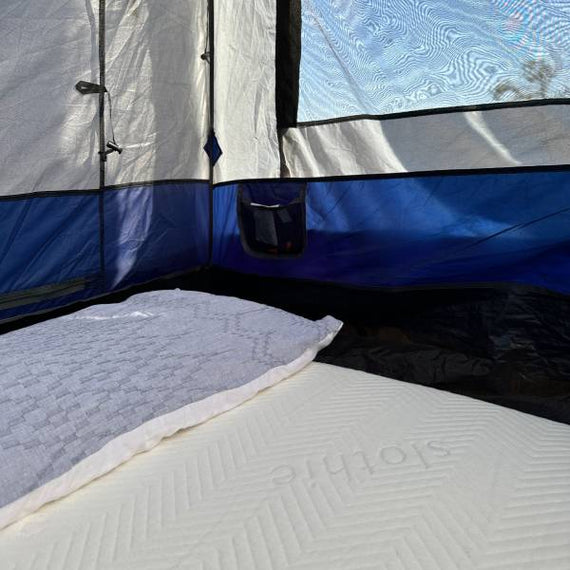
Choose a better pitch
A good night's sleep begins before the tent is out of its bag. Even a comfortable sleeping mat struggles if it is laid over a slope, a hidden root or a patch of ground that collects water.
Walk the pitch before committing. Look for the flattest available area and remove small stones, twigs and pine cones. If the ground slopes slightly, position your head at the higher end rather than trying to sleep downhill.
- Keep clear of low ground: it can feel colder and may become damp after rain.
- Think about foot traffic: pitches near toilets, taps, bins and paths can be noisier than they first appear.
- Allow for morning light: a tent that catches early sun may become warm quickly, particularly in summer.
- Check what is overhead: avoid pitching beneath dead branches and take notice of dripping trees after rain.
Do not judge a pitch only while standing up. Kneel or lie down where your sleeping area will be. A small ridge that seems insignificant on arrival can feel much less so at 2am.
Build a comfortable sleeping base
The ground draws heat away from you, and it does not give much back in terms of comfort. For that reason, the best camping bed set-ups usually have two jobs to do: provide insulation and reduce pressure from a hard or uneven surface.
Start with a sleeping mat, self-inflating mat, camp bed or existing caravan-style mattress. Then decide what it is missing. If you are waking with pressure points around your shoulders or hips, you may need more cushioning. If you feel cold from underneath, prioritise insulation first.
| Sleeping set-up | Best for | What to watch for |
|---|---|---|
| Sleeping mat | Light packing and short trips | Can feel firm, narrow or cold without enough insulation |
| Air bed | Occasional camping and family trips | May lose air overnight and can feel chilly underneath |
| Camp bed | People who prefer to sleep off the ground | Still benefits from a padded layer on top |
| Fixed awning or caravan mattress | Regular touring and longer stays | Often designed around space and shape rather than comfort |
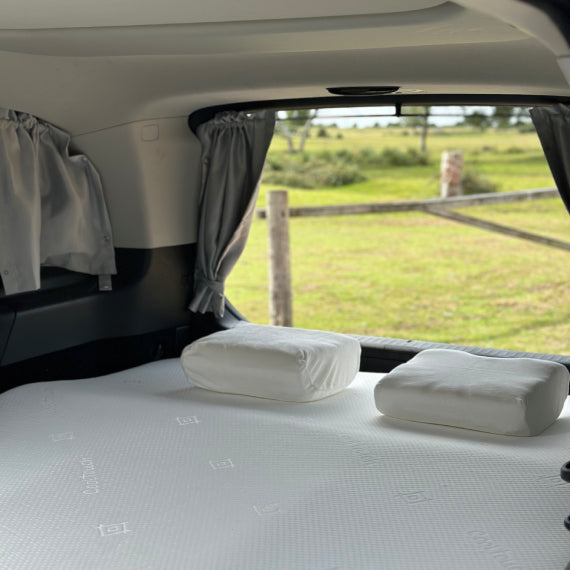
A topper can be a sensible option where the existing surface is supportive but simply too firm or thin. It is particularly useful in awnings, larger tents and camping set-ups where you have room to bring bedding that feels closer to home.
Keep warm without overheating
Camping temperatures are often less predictable than the forecast suggests. A warm afternoon can be followed by a surprisingly cold night, while a well-sealed tent can feel stuffy before you drift off.
Layering is more useful than taking one very heavy blanket. It lets you adjust through the night without having to unpack half the car. A fitted sheet over your sleeping surface also makes the bed feel less improvised and gives you a familiar, comfortable layer against the skin.
- Use sleepwear that is dry, comfortable and not too restrictive.
- Keep tomorrow's clothes outside your sleeping bag or duvet, rather than wearing them all night.
- Ventilate the tent as conditions allow to reduce condensation and stuffiness.
- Keep a warmer layer within reach for the early hours.
If you use an air bed, place an insulating layer between it and your body. Air can feel cold overnight, even when the bed initially feels comfortable.
Make your bed feel familiar
Small comforts can make a larger difference than expected. Your usual pillow, a proper pillowcase and bedding that does not rustle every time you turn over all help the set-up feel less unfamiliar.
This is especially worthwhile for longer trips. The first night on a basic camping bed can seem perfectly manageable. By the second or third, an uncomfortable mattress or flat pillow tends to make itself known.
Avoid overpacking the sleeping area, though. Bags, spare clothing and camping equipment have a habit of migrating into the tent at bedtime. Give each person a clear space for shoes and essentials so the sleeping area stays calm and uncluttered.
Reduce noise and light
You cannot control every campsite sound, but you can soften the effect. Earplugs are useful if you are comfortable wearing them, while an eye mask can help in summer when daylight arrives early through tent fabric.
Before bed, zip the tent or awning carefully, secure anything that might flap in the wind and move rattly items away from the sleeping area. A loose guyline or a metal mug rolling around in the porch can become surprisingly important at midnight.
Try to keep your usual wind-down routine where possible. Read for a few minutes, have a warm drink or simply put the phone away earlier. Camping already gives your brain a different environment; a familiar pre-sleep habit can make the adjustment easier.
When a topper is worth packing
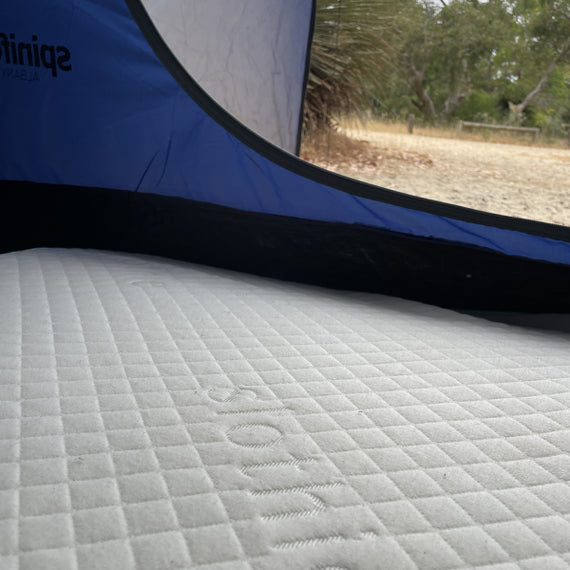
If you regularly sleep in an awning, family tent, campervan or caravan, improving the sleeping surface can be more useful than continually replacing pillows and blankets. A topper is designed to add comfort over an existing mattress, air bed or camp bed without permanently changing the set-up.
The Slothie Travel Mattress Topper is designed for portable sleeping situations rather than a bed that stays in one room. It suits campers who have a usable base but want more cushioning, and who need to store their sleep set-up neatly between trips.
It will not solve every problem. If your bed is badly sagging, extremely uneven or offers very little support, a topper may not be enough on its own. In that situation, a thicker portable option such as the Slothie Sleepover Mattress may be the more appropriate choice, provided you have space to transport it.
Match the sleep solution to the problem. Add a topper when the base is sound but too firm; consider a thicker portable mattress when the base itself is not comfortable enough to work with.
Camping sleep FAQs
Why do I sleep badly in a tent?
Most people are adjusting to several things at once: a firmer bed, unfamiliar sounds, different temperatures and more light. Improving the pitch, sleeping surface and bedding usually makes the biggest difference.
Is an air bed good for camping?
An air bed can be comfortable for some campers, particularly on shorter trips. Choose a good-quality one, check it for leaks before travelling and add an insulating layer on top if it feels cold or too firm.
What should I put under my sleeping bag?
Use a sleeping mat or another insulating sleeping surface. A sleeping bag alone is compressed beneath your body and cannot provide much cushioning or insulation from the ground.
How can I make an awning bed more comfortable?
Start with a level base, then assess whether the existing mattress needs insulation, cushioning or both. A topper can help if the bed feels too firm, while familiar pillows and layered bedding make the space more comfortable for longer stays.
Key takeaways
- A level, quiet pitch is the foundation of better camping sleep.
- Insulation and cushioning solve different problems, so consider both.
- Layered bedding is easier to adapt as the temperature changes.
- For regular camping, improving the sleep surface is often the most practical comfort upgrade.
Explore travel toppers
If your camping bed is supportive but lacks comfort, explore a portable topper designed for nights away from home.
Browse the Slothie Travel Mattress Topper


